- 3 mins read time
- Published: 18th September 2026
Irish EU Presidency comes at a pivotal moment for European and global climate action
The climate crisis is the greatest threat to humanity and the planet, driving inequality, hunger and displacement. It is fuelling conflict and pushing millions deeper into poverty. Those least responsible for the climate crisis continue to bear a disproportionate burden of its impacts.
The Irish EU Presidency comes at a pivotal moment for European and global climate action. The EU is entering a key phase in shaping its post-2030 climate and energy framework and preparing for COP31 Ireland will have an important role in safeguarding ambition, advancing climate justice and reinforcing the EU’s credibility as a global climate leader. This leadership is especially important as some governments and industry actors seek to roll back environmental protections and weaken climate ambition.
The EU 2040 target does not represent a fair contribution to limit global warming in line with the Paris Agreement. Any further weakening of the target - including using international carbon credits - should be avoided. Weakening ambition would risk undermining the EU’s ability to meet its legally binding objectives of climate neutrality by 2050 under the European Climate Law.
In the revision of the Emissions Trading System (ETS), Ireland should ensure that the that the ETS avoids watering down of climate safeguards, including maintaining a linear reduction factor, rejecting the introduction of international credits and ensuring ETS revenues are used for additional climate action, including international climate finance. In the revision of the renewable energy directive (RED III), Ireland must ensure a focus on genuine renewable energy solutions, avoiding measures that distract from a rapid, just and equitable transition away from fossil fuels.
Ireland will also play a key role in shaping and coordinating the EU’s approach on the international process on transitioning away from fossil fuels (TAFF), initiated at COP30 discussions in Belém. The EU has a particular responsibility as one of the world’s largest historical emitters to contribute to this process, including by ensuring the outcomes of the recent Santa Marta conference feed into the COP30 presidency roadmap. Ireland has already positioned itself as a global climate player, agreeing to co-host the next TAFF conference, and it can use the EU Presidency as an opportunity to ensure a global, equitable and just phase out of fossil fuels grounded in climate science, equity and solidarity. This climate leadership must be translated into action through the development and implementation of phase out plans and support provided to Global South countries to follow suit.
In addition, Ireland will be leading the EU delegation into COP31 and has an important role in strengthening EU ambition on climate finance as part of obligations under the UN climate framework. Ireland can broker negotiations with Member States to identify new sources of climate finance, such as taxes on fossil fuel profits, and encourage them to update and increase their post-2025 climate finance commitments in line with the New Collective Quantified Goal (NCQG) of mobilising at least $300 billion annually by 2035 for developing countries, including tripling annual adaptation finance.

In parallel, Ireland can elevate discussions on carbon inequality. Oxfam’s research shows that Europe’s wealthiest are burning through our carbon budget while ordinary European’s are driving carbon cuts.
Related Blog Articles
-
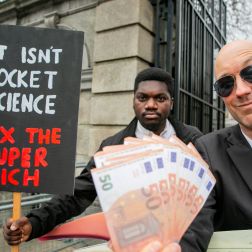
Budget 2027: Tax the Super Rich
-

Inequality is deepening, but Ireland can push for it to be addressed during EU Presidency
-

Ireland must safeguard digital rights during its EU Presidency
-

On a sombre World Humanitarian Day 2026, we must celebrate the instinct to collaborate, survive and rebuild