58 million people do not have access to clean drinking water.
Millions of livestock are at risk as drought devastate grazing lands and water sources, threatening pastoralist livelihoods.
Across the three countries, nearly 26 million people are facing extreme hunger.
Failure of the last rainy season across Somalia, Kenya and Ethiopia is triggering a food and water emergency for millions of people still trying to recover from the longest and most severe recorded drought spanning from 2020 to 2023 during which five rainy seasons in a row failed. Dry wells, soaring water prices, crop losses and livestock deaths are pushing communities to the brink, warns Oxfam.
Across the three countries, nearly 26 million people are facing extreme hunger as drought conditions worsen, decimating crops before harvest and leaving livestock to die from lack of water and pasture. Deepening water scarcity is also driving displacement with more than 58 million people lacking access to clean water. As rivers and shallow wells dry up, families –most often women and girls – are forced to walk up to 15 kilometers for a single 20-liter jerrycan while soaring prices put water trucking beyond reach for many families.
In parts of Somalia, Oxfam staff and partners report that the cost of water has increased by more than 2000 percent. Families are now paying between $1 and $1.50 for a single jerrycan of water, compared to $0.06 a year ago. For families who have already lost their crops, livestock and sources of income, water is now unaffordable. In Hobyo town, north of the country’s capital, communities are relying on water trucked from Gawaan village, located 30 kilometers away. High transportation costs are driving up prices even further.
"Right now, millions of people across Somalia, Kenya and Ethiopia are being pushed to the brink by a worsening drought that has devastated crops, killed livestock and left families without enough food or water to survive. Oxfam staff and partners report that the cost of water has increased by more than 2000 percent. The soaring cost of water in East Africa is one of the clearest indicators of just how desperate this crisis has become."
— Jim Clarken, Oxfam Ireland CEO
In Somalia, a new Integrated Food Security Classification (IPC) alert revealed that the number of people facing hunger has nearly doubled since early 2025, rising to 6.5 million people. One in three people in the country are expected to be in crisis level hunger between February and March 2026. Levels of acute malnutrition have more than doubled, with communities struggling to survive as the climate crisis deepens.
In Kenya’s arid and semi-arid areas, communities are reporting reduced harvests while in Ethiopia, some areas are reporting crop losses due to the failure of the last two rainy seasons, leaving households empty-handed. FEWSNET estimated that some regions had suffered production losses of 34 to 54 percent due to a severe rainfall deficit.
“For families who have already lost everything, this is an impossible burden. It is unimaginable that the basic human right of water has become out of reach for so many. When a mother has to choose between buying water or feeding her children, something has gone terribly wrong."
— Jim Clarken, Oxfam Ireland CEO.
Livestock, the backbone of pastoralist communities, are dying in large numbers as water and grazing lands completely dry up. In Somalia alone, an estimated 1.4 million livestock died in 2025, with another 2.5 million at risk. In Kenya’s northern counties, animal deaths from starvation and disease are rising while milk production has dropped by more than half, stripping families of their main source of food and income while in Ethiopia, poor rains have weakened livestock.
The deepening crisis is unfolding amid severe humanitarian funding gaps. While needs have surged across East Africa, funding has declined sharply leaving millions of families to fend for themselves. In 2021, Somalia, Kenya and Ethiopia required $2.65 billion in humanitarian aid, with just under 61 percent funded. In 2025, less than one-third of overall humanitarian requirements were met. In Somalia, the 2025 Humanitarian Response Plan received only 29 percent of the required funding while the 2026 has secured barely 13.4 percent so far.
“The upcoming dry season will not just be difficult – it could be the final blow pushing communities beyond the point of recovery. Urgent funding is needed now to save lives across the region. Communities here have contributed almost nothing to global climate crisis, yet they are paying the highest price. Families are fighting every day to survive its consequences. We can’t fail them,” said N’Zi-Hassane.
Across Somalia, Kenya and Ethiopia, Oxfam is working with local partners to deliver life-saving water, hygiene kits, cash assistance and protection support to hard-to-reach and most severely affected communities
Clare Cronin, Head of Communications – Oxfam Ireland clare.cronin@oxfam.org +353 (0)87 195 2551
According to the WHO/UNICEF JMP 2025 report, access to drinking water varies significantly across the Horn of Africa.
Somalia: 22 percent (4.2 million people) rely on unsafe water.
Kenya: 8 percent of (4.5 million) rely on unimproved water.
Ethiopia: 37 percent of the population rely on unimproved water.
The total figure of people requiring food assistance by mid-2026 in Somalia, Kenya and Ethiopia is between 24.5 to 25.9 million people. Calculations from data below:
According to the IPC, a staggering 6.5 million people in Somalia are estimated to be facing high levels of acute food insecurity—nearly double the number recorded in August 2025
FEWS NET estimates 3.0 to 3.49 million people in Kenya will require humanitarian food assistance between October 2025 and May 2026, driven by poor short rains.
FEWSNETfood insecurity in Ethiopia remains severe, with up to 15–15.9 million people expected to need urgent food assistance by July 2026 amid Crisis and Emergency conditions, driven in part by significant drought-related production losses of 54% in East Hararghe and 34% in West Hararghe due to rainfall deficits.
The loss of 1.4 million livestock in Somalia was reported by WFP and the estimate of the 2.5 million being at risk is from OCHA.
In 2021, Kenya’s drought flash appeal received $29.5 million of the $69.7 million required (42 percent), Somali’s Humanitarian Coordinated Plan received $862.3 million of the $1.092 billion required (79 percent) and Ethiopia’s Humanitarian Coordinate Plan received $719.1 million of the $1.488 billion required (48,3 percent).
Somalia Humanitarian Coordinated Plans Funding for 2025 saw $412 million of the required $1.42 billion (29 percent) and for 2026 to date $119.2 million has been raised of the $825 million required (13.4 percent).

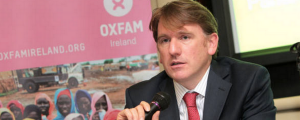 "Right now, millions of people across Somalia, Kenya and Ethiopia are being pushed to the brink by a worsening drought that has devastated crops, killed livestock and left families without enough food or water to survive. Oxfam staff and partners report that the cost of water has increased by more than 2000 percent. The soaring cost of water in East Africa is one of the clearest indicators of just how desperate this crisis has become."