I think we should be proud of the fact that throughout all the Troubles the shop kept people together from both sides of the community through really difficult times.
- 6 mins read time
- Published: 25th January 2026
From Volunteer to Trading Director: Trevor's Oxfam Journey
40 years in Oxfam Ireland

The last 40 years have seen so much change, but in Oxfam Ireland one thing has remained constant throughout that whole time. That is to say, one person. Trevor Anderson is Director of Trading at Oxfam Ireland and he has been working here for 40 years. Read about his journey.
When you first walked in as a volunteer 40 years ago, what job did you think you’d end up doing, and how does Director of Trading compare?
“It was 25 October 1984, Michael Burke was doing his report from Ethiopia during the Famine on 24 October on the nine o’ clock News. I was at home, watched it and thought, I should do something. So the next day, I rang Oxfam and they said to come in.”
In 1984, Trevor left the Royal Marines after 10 years there, as he hurt his back. His recovery was at home, so he decided to volunteer in Oxfam.
“The first job I had was shaking a bucket outside the City Hall. Basically, I was raising money for Oxfam, so things haven’t really changed, I’m still raising money now.
“I did my six-month work experience in Oxford, which was then headquarters, as it was Oxfam UK and Ireland (combined) at that stage. I worked in Oxfam House in Summertown in the Shops Unit. I was ordering hoovers (vacuums), cash registers, sack holders for the shops over the UK and Ireland.”
After a year there, he became a shop manager.
“I came back to open the Dublin Road shop in 1986. Really, I was coming back because Hannah (Trevor’s wife who he met when she interviewed him for Oxfam) was in the office - that was the real reason.
“I became the first paid shop manager in Oxfam. Then I became peripatetic shops manager (a mobile manager who works across multiple shop locations), responsible for Fair Trade.”
Trevor then became District Retail Manager, Head of Retail and eventually, Director of Trading.
What’s a decision, project, or something you’re proud of that most people might not even know you were behind?
“I’m proud of the fact that throughout the Troubles in Northern Ireland. The sectarian side of the Troubles never affected Oxfam. We had both sides of the community working in shops together through many difficult times.”
Some shops such as Dublin Road, Portadown, Coleraine and Newtownards were bombed.
“We had a really difficult period during the Omagh bombing. We lost two of our volunteers, Lorraine and Samantha, both were teenagers. Brian was the brother of another volunteer in Oxfam, so we had three deaths. We got through that because of the staff, the volunteers and the community.
“I think we should be proud of the fact that throughout all the Troubles the shop kept people together from both sides of the community through really difficult times.”

Another proud moment was in 2008, when Trevor brought a team of Oxfam staff and supporters to the top of Mount Kilimanjaro as part of a fundraising event they did. They raised €125,000.
When you started 40 years ago, what was the cutting-edge office technology?
“The only equipment we had in the office were landline telephones and typewriters and that was it. There was also a printer that you had to turn the handle to print and it printed on this big drum.
“I remember it like yesterday (when the offices first got a fax machine). We had someone on the phone in Dublin standing beside their fax machine. We put our fax in, it came out in the Dublin office and we got them to read out what we’d said on the fax. We thought ‘My God things can never get better than this, this is unbelievable’.”
What’s a moment early in your journey that made you think, “Yes, I’m sticking around”?
“That was probably Hannah, the reason I was sticking around. There was not really one moment that made me think, ‘this is for me,’ It was more ‘she is for me!’”
What’s the legacy or lesson you hope the next generation of Oxfam retail leaders will carry forward long after you?
“Simple, it’s all about the people. You can have the best product, best location, best processes, but if you don’t have highly motivated team players it’s not going to work.”

You’ve seen the retail network grow across the island, what change surprised you the most over the years?
“I think what has surprised me is the length of time it’s taken the confederation to accept the importance of Trading to the organisation and how they can be used to highlight Oxfam’s mission to the consumer and public as Oxfam Ireland have done so successfully.”
What’s a misconception about working “behind the scenes” in charity retail that you wish more people understood?
“Running a business within a charity is extremely challenging because you’ve got to keep the balance all the time. For many years, Oxfam shops were there to raise money, but really, they were the face of Oxfam. We were trying to promote the international programmatic side of our work, but over the years we realised we needed to get more commercial, more professional and become a fashion retailer and that probably started about 12 or 13 years ago.

"I knew in the future it would be more difficult because there was a lot of competition from other charities setting up retail operations. Then, I could see the whole sustainability, circular economy coming, so we’d then have competition from the commercial sector.
“People don’t understand the difficulty and constant pressure shop staff are under. Whether it be from their line manager, donors, customers, volunteers. The workload is extremely challenging.
“The hard work, how they embrace constant change and the sheer resilience of our trading staff and volunteers never cease to inspire me.
“As I said before it’s all about the people.”
Related Blog Articles
-
Response to the National Policy Statement & Roadmap on Circular Textiles 2026–2028
-
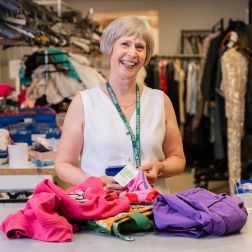
Volunteer Week: Barbara’s volunteering journey
Oxfam volunteers are making a huge impact every day and each has their own story when it comes to how they started volunteering. Here is Barbara Harper’s volunteering journey. She has volunteered in the Oxfam Holywood Superstore since it opened just over a year ago. -
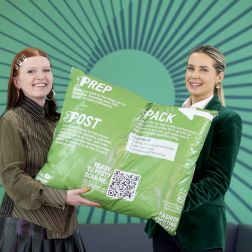
How to Use Oxfam Ireland’s PostBack: Your Step-by-Step Guide to Donating by Post
Our PostBack service, in partnership with An Post, makes it easy to donate pre-loved fashion, books, and accessories, just pack them up and post them back to us for free. But before you drop your bag off or book a collection, there are a few important steps you must follow to make sure your donation gets to us safely and securely. -
how to drop off your postback bag
Returning your items to Oxfam Ireland through PostBack? Good news – it’s free and easy with An Post! Here’s what you need to do before dropping-off the bag at your local post office.