There’s no more water loss. We’ve even started planting traditional crops that we had to stop growing because they needed too much water.
- 2 mins read time
- Published: 28th January 2026
How Palestinian Farmers Are Reimagining the Future
Across the West Bank, farmers are adapting to conflict and climate change with smart technology, agroecology, and community-led solutions, turning water scarcity, frost, and waste into opportunities for sustainable livelihoods.
As part of a national initiative supported by the German Federal Ministry for Economic Cooperation and Development (BMZ), Oxfam is working alongside 18 organisations to help farmers innovate and adapt in the face of growing uncertainty. Through new technologies, sustainable farming practices, and stronger institutional support, this collaboration is transforming how communities respond to climate stress and conflict.
Oxfam and its partners are turning challenges into solutions: sprinklers that protect crops from frost, remote irrigation systems that save time and water, agroecology approaches that cut costs while increasing yields, and water access that allows communities to grow trees and green their surroundings. What once felt impossible, reviving traditional crops, planting around homes, or managing farms remotely, is now part of everyday life for many farmers.
At the heart of this work is Oxfam’s project in the West Bank, which aims to strengthen the resilience of vulnerable communities and ecosystems affected by conflict and climate change. The project focuses on stabilising basic needs and livelihoods, fostering sustainable and adaptive farming systems, and promoting inclusive governance and social cohesion. From rehabilitating critical water and sanitation infrastructure to supporting green economy initiatives and disaster risk management, the approach is deliberately holistic.
Crucially, the project addresses the structural causes of vulnerability through conflict-sensitive programming, ensuring marginalised groups, especially women, are empowered as active decision-makers. By backing local leadership, creativity, and partnership, these initiatives are not only protecting livelihoods today, but also nurturing a more resilient, peaceful, and sustainable agricultural future for Palestinian communities.
Related Blog Articles
-

Cork : Global Justice Lunchtime Sessions
-

On a sombre World Humanitarian Day 2026, we must celebrate the instinct to collaborate, survive and rebuild
-
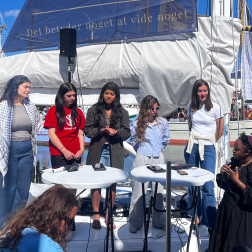
Stronger together: We travelled to a Danish democracy festival to strengthen our activism
-

Flash Floods and Landslides Have Struck Rohingya Camps Again –We Cannot Look Away